LEED Green Buildings and Energy Efficiency: Choose Ber Wilson.
| By Ericson Tua'one
- Commercial
- Construction
- Federal
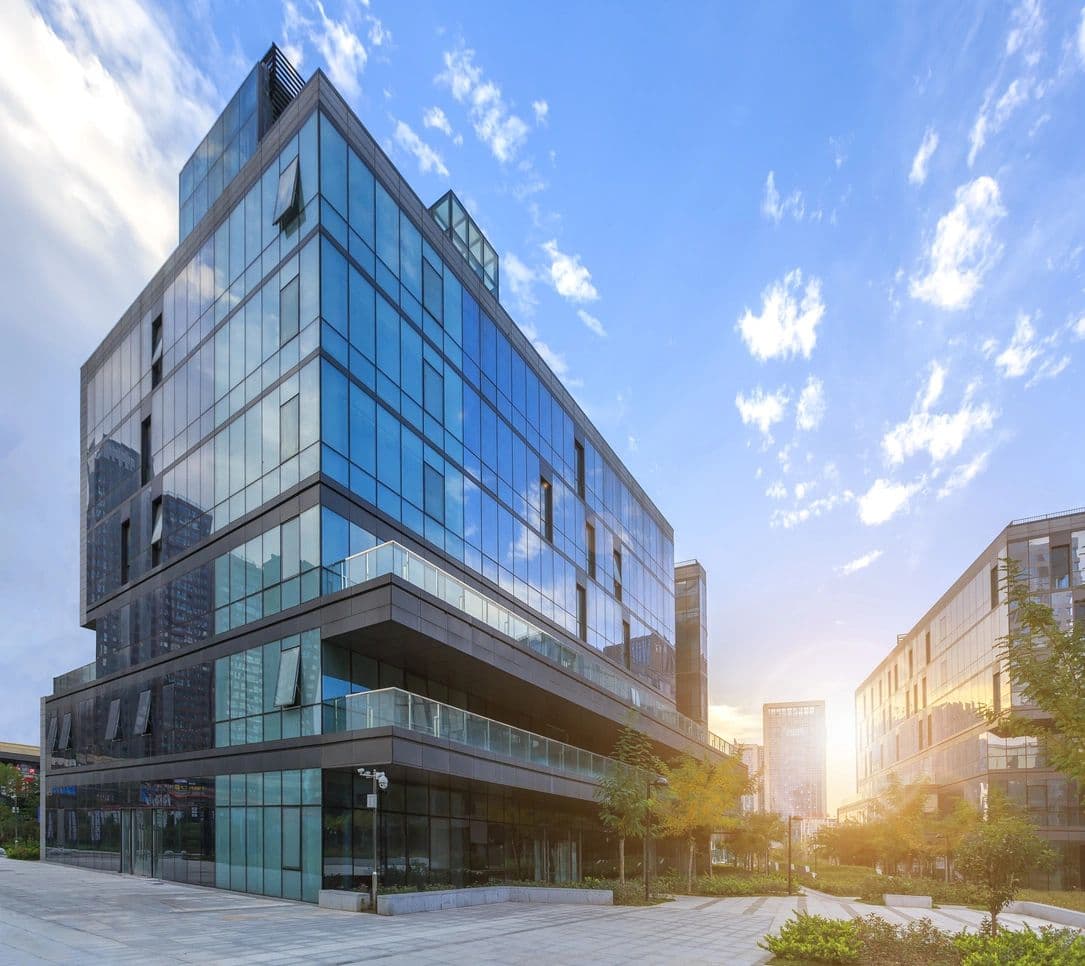
Green building isn't a nice to have anymore. It's a competitive requirement.
LEED-certified buildings command 7-12% rent premiums, achieve 4.1% higher occupancy rates, and sell for 16% more than conventional buildings (Primior, 2025; AIA, 2023). Tenants demand energy-efficient spaces. Investors require sustainability credentials. Regulators mandate climate compliance.
The question isn't whether to build green, it's who can deliver LEED certification without sacrificing speed, cost control, or quality.
That's where Ber Wilson separates from traditional contractors.
The LEED Opportunity: Financial Returns Are Real
Operating Cost Reductions: 20-30% Savings
LEED-certified buildings deliver measurable financial returns through lower operating costs. Research shows:
Energy savings: 25-30% reduction in energy costs compared to non-LEED buildings (Department of Energy, 2025; System Electric, 2025)
Water savings: 11% reduction in water consumption (Department of Energy, 2025)
Maintenance savings: 20% lower maintenance costs than conventional buildings (Primior, 2025)
Total operating cost reduction: 14-30% across all categories (Primior, 2025)
For a 50,000 square foot commercial building, LEED certification reduces operating costs by $2.53 per square foot annually, translating to $126,500 in annual savings (Primior, 2025). Over a 30-year building lifecycle, that's $3.8 million in savings.
Property Value and Market Performance
LEED-certified buildings outperform conventional buildings across every financial metric:
Rental premiums: 7.1-11.6% higher rents for certified office assets (Primior, 2025)
Sale premiums: 16% higher sale prices than conventional buildings (AIA, 2023)
Occupancy rates: 4.1% higher occupancy for LEED-certified buildings (AIA, 2023; Primior, 2025)
Vacancy rates: 1-2% vacancy in certified properties vs. higher rates in non-certified buildings (Primior, 2025)
Lease-up speed: Certified properties reach 80% leasing within six months; non-certified reach only 21% (Primior, 2025)
Return on investment: 19.2% ROI for existing buildings, 9.9% ROI for new buildings (LB&B Associates, 2020)
One major software company reported a 20:1 net present value return on its LEED Platinum investment. Another firm achieved full ROI in under 8 years (LB&B Associates, 2020).
Environmental Impact
LEED-certified buildings achieve:
25-50% energy use reduction (Primior, 2025; Solar Tech, 2025) 10-40% water consumption reduction (Primior, 2025) 34% reduction in carbon emissions (LB&B Associates, 2020) 50-90% reduction in construction waste (Solar Tech, 2025)
How LEED Certification Works: The Points System
LEED (Leadership in Energy and Environmental Design) is a globally recognized green building certification developed by the U.S. Green Building Council (USGBC). Projects earn points across multiple categories to achieve certification levels:
Certification Levels:
LEED Certified: 40-49 points LEED Silver: 50-59 points LEED Gold: 60-79 points LEED Platinum: 80+ points
LEED Categories (where projects earn points):
Energy and Atmosphere (EA): Energy efficiency, renewable energy integration, refrigerant management
Materials and Resources (MR): Recycled content, material reuse, waste management, life cycle assessment
Sustainable Sites (SS): Site selection, stormwater management, heat island reduction, light pollution
Water Efficiency (WE): Indoor water use reduction, outdoor water use reduction, water metering
Indoor Environmental Quality (IEQ): Indoor air quality, thermal comfort, daylighting, views
Innovation (IN): Design innovation, LEED Accredited Professional involvement
Regional Priority (RP): Region-specific environmental priorities
LEED v5: The 2025 Standard
In 2025, the USGBC rolled out LEED v5, the biggest update in over a decade. Key changes include:
Decarbonization focus: Projects must demonstrate clear plans to reduce operational and embodied carbon in alignment with science-based climate targets (Clenergize, 2025)
Social equity: New prerequisites like Human Impact Assessment and credits for equitable operations, including improved conditions for custodial staff (Clenergize, 2025)
Climate resilience: Credits targeting climate adaptation, disaster preparedness, and strategies for extreme weather (Clenergize, 2025)
Existing building flexibility: More pathways for incremental improvements in existing buildings (Clenergize, 2025)
Why Prefab Steel Construction Dominates LEED Certification
Steel construction products contribute to multiple LEED credits across nearly every category. Here's how Ber Wilson's prefab steel construction delivers LEED points.
1. Materials and Resources (MR): Steel's Recycled Content Advantage
Steel is the most recycled material on Earth. American steel contains minimum 25% recycled content, with Electric Arc Furnace (EAF) steel averaging 82.8% recycled content and Basic Oxygen Furnace (BOF) steel averaging 28.9% recycled content (AISC, 2025; Build Steel, 2025).
LEED CREDITS ACHIEVES:
MR Credit: Building Product Disclosure and Optimization - Sourcing of Raw Materials (1-2 points): Steel's high recycled content (25-100%) qualifies for responsible extraction criteria. Default value: 25% post-consumer recycled content allowed by LEED Reference Guide (AISC, 2025; SCAFCO, 2023).
MR Credit: Construction and Demolition Waste Management (2 points): Steel products are 100% recyclable. Factory-controlled prefab construction generates less than 5% waste vs. 15-30% for traditional site-built construction (Velent, 2016; Building Performance Association, 2025).
MR Credit: Material Reuse: Steel structures can be disassembled and reused in new projects. Unlike concrete (which must be crushed) or wood (which degrades), steel retains structural integrity through multiple reuse cycles (Velent, 2016).
MR Credit: Environmental Product Declarations (EPDs) (2 points): Steel manufacturers provide EPDs demonstrating transparency and lifecycle environmental impacts. Steel Framing Industry Association offers comprehensive EPDs for cold-formed steel framing (Build Steel, 2025).
Ber Wilson advantage: 100% American steel from American ore mines, manufactured in Salt Lake City. Recycled content automatically qualifies for LEED MR credits. Factory precision minimizes waste to less than 5%.
2. Energy and Atmosphere (EA): Superior Thermal Performance
Energy efficiency is the highest-weighted LEED category. Buildings that optimize energy performance earn the most points.
How steel construction achieves EA credits:
Insulated Metal Panels (IMPs): Ber Wilson uses high-performance IMPs with R-values of R-19 to R-30+, providing continuous insulation without thermal bridging (Wiebes Steel, 2024).
Thermal breaks: Modern steel construction integrates thermal breaks that eliminate thermal conductivity concerns, achieving equivalent or superior performance to other materials (Wiebes Steel, 2024).
Reflective roofing: Steel roofing with reflective coatings reduces cooling loads by reflecting solar heat, contributing to heat island reduction (EA credits) and energy savings (LB&B Associates, 2020).
Renewable energy integration: Steel structures easily accommodate solar panels, wind turbines, and other renewable energy systems. Clear-span steel framing allows optimal roof panel placement without structural obstructions (Worldwide Steel Buildings, 2025).
Verified performance: LEED-certified buildings use 25% less energy than conventional buildings (Department of Energy, 2025). Steel buildings with proper insulation achieve 30-60% energy reductions (Ceco Building Systems, 2023).
Ber Wilson advantage: Engineering (100) + HVAC (S350) licensing ensures energy systems are integrated during design, not retrofitted. Energy modeling optimizes thermal performance for maximum LEED EA points.
3. Sustainable Sites (SS): Reduced Site Impact
Prefab construction minimizes jobsite disruption, a key LEED requirement.
How Ber Wilson achieves SS credits:
Reduced site activity: Manufacturing occurs offsite; onsite work limited to assembly. This reduces construction traffic, noise, and pollution (Velent, 2016).
Stormwater management: Steel roofing systems integrate rainwater harvesting and stormwater controls (BOXX Modular, 2025).
Light pollution reduction: Factory-manufactured steel structures allow precise design for exterior lighting placement, minimizing light trespass (Build Steel, 2025).
Heat island effect reduction: Reflective steel roofing reduces surface temperatures, contributing to urban heat island mitigation (Worldwide Steel Buildings, 2025).
Construction activity pollution prevention: Factory production eliminates onsite dust, runoff, and erosion associated with traditional construction (Velent, 2016).
4. Indoor Environmental Quality (IEQ): Healthier Indoor Spaces
Steel is non-toxic, inert, and doesn't off-gas, contributing to superior indoor air quality.
How steel achieves IEQ credits:
Low-emitting materials: Steel doesn't contain volatile organic compounds (VOCs), formaldehyde, or other toxic chemicals found in treated wood or composite materials (Build Steel, 2025).
Mold and moisture resistance: Steel is non-organic and doesn't support mold growth, improving indoor air quality (Build Steel, 2025).
Daylighting: Clear-span steel framing maximizes interior space for windows and skylights, increasing natural light penetration (BOXX Modular, 2025).
Thermal comfort: Properly insulated steel buildings maintain consistent interior temperatures without drafts or cold spots (Wiebes Steel, 2024).
Ber Wilson advantage: HVAC (S350) licensing ensures ventilation, air filtration, and thermal comfort are designed for occupant health from day one.
5. Innovation (IN): Integrated Design Process
LEED rewards innovation and integrated design approaches.
How Ber Wilson achieves IN credits:
Integrated design: Ber Wilson combines manufacturing, general contracting, engineering, and HVAC design in one entity, demonstrating comprehensive sustainable design integration (Fort Polk contract, 2025).
LEED Accredited Professional (AP): Projects employing LEED APs earn innovation points. Ber Wilson's team includes sustainability experts who guide LEED strategy (USGBC, 2025).
Advanced technologies: CNC robotic steel fabrication, digital twin quality control, and precision manufacturing demonstrate innovation in construction methods (Beamcut, 2024).
Real-World LEED Case Studies: Proven Performance
Case Study 1: Illinois LEED Projects (25 Buildings)
A regional green building study analyzed 25 LEED projects in Illinois, comparing energy performance:
Finding: LEED projects that achieved higher EA Credit 1 points (energy optimization) performed better significantly in post-occupancy energy use (Bean Kinney, 2021).
Key insight: Energy-focused LEED strategies deliver real-world savings, not just certification points.
Median EUI: 38 kBtu/sq ft/year for LEED projects vs. higher values for conventional buildings (Bean Kinney, 2021).
Case Study 2: Louisiana State University LEED Residential Building
A 2022 study evaluated Cypress Hall, a LEED Silver residential building, comparing it to non-LEED buildings on campus:
Finding: LEED-certified building achieved higher occupant comfort and satisfaction scores despite marginally higher energy consumption (attributed to design features prioritizing comfort) (ScienceDirect, 2022).
Key insight: LEED buildings deliver value beyond energy savings, occupant satisfaction drives retention and premium pricing.
Case Study 3: Texas Governor's Mansion LEED Gold Restoration
The 1856 Texas Governor's Mansion achieved LEED Gold certification following fire restoration:
Strategy: Massive salvage effort reused every possible material, including original window weights. Integrated design addressed preservation, energy efficiency, and financial returns simultaneously (TSPB, 2014).
Result: LEED Gold certification through material reuse, energy-efficient systems, and sustainable construction practices (TSPB, 2014).
Case Study 4: Modular LEED Buildings
Modular construction supports LEED through:
Waste reduction: Less than 5% waste vs. 15-30% for traditional construction (Velent, 2016) Material efficiency: Bulk purchasing and inventory control in factory settings (BOXX Modular, 2025) Reusability: Modular components can be disassembled and reused at end of lifecycle (AIA Contracts, 2025)
Finding: Modular construction delivers faster LEED certification timelines due to controlled factory documentation and consistent quality (BOXX Modular, 2025).
Why Ber Wilson Is Your LEED Partner: The Integrated Advantage
Most contractors claim they can "help with LEED." Ber Wilson delivers LEED certification as part of the integrated design process, not as an afterthought.
1. Built-In LEED Credits from Day One
Ber Wilson's prefab steel construction automatically qualifies for:
✅ Materials and Resources credits (25-100% recycled steel content, <5% waste, 100% recyclability)
✅ Energy and Atmosphere credits (R-19 to R-30+ insulation, thermal breaks, reflective roofing, renewable energy-ready)
✅ Sustainable Sites credits (reduced site activity, stormwater management, heat island reduction)
✅ Indoor Environmental Quality credits (non-toxic steel, mold resistance, daylighting optimization)
✅ Innovation credits (integrated design, CNC precision, digital twin quality control)
You don't have to chase LEED credits after construction starts. They're embedded in the steel system from design.
2. One Contractor, One Accountability for LEED
Traditional LEED projects involve:
Architect designing sustainable features General contractor building without LEED expertise Sustainability consultant tracking credits separately Multiple subcontractors with no LEED training LEED AP consultant brought in late to "fix" documentation
Result: Coordination chaos, missed credits, delayed certification.
Ber Wilson integrates LEED from day one:
.✅ Licensed GC (B100 + Engineering 100 + HVAC S350) — Energy systems designed sustainably from the start.
✅ Steel manufacturer (Salt Lake City) — Control over material sourcing, recycled content verification, EPD documentation.
✅ Integrated design team — Sustainability goals aligned across manufacturing, construction, and operations.
✅ Single point of accountability — One entity responsible for LEED strategy, documentation, and certification.
When one contractor controls design, manufacturing, and construction, LEED certification becomes systematic, not accidental.
3. Faster LEED Documentation
LEED certification requires extensive documentation: material sourcing, waste diversion, energy modeling, indoor air quality testing, construction activity reports.
Traditional construction struggles with documentation because:
Multiple subcontractors don't track data. Onsite waste isn't measured accurately. Material suppliers don't provide EPDs or recycled content verification. Energy modeling assumptions don't match actual construction.
Ber Wilson's factory-controlled manufacturing solves this:
✅ Waste tracking: Factory production measures exact material usage and waste diversion (typically >95% diversion).
✅ Recycled content verification: Steel sourcing documented directly from mills with certified recycled content percentages.
✅ EPDs available: American Iron and Steel Institute and Steel Framing Industry Association provide comprehensive EPDs.
✅ Energy modeling accuracy: Factory-built modules match design specifications exactly, no field adjustments that invalidate energy. models
✅ Construction activity reports: Reduced onsite activity means simplified reporting for site pollution prevention.
Result: LEED documentation is faster, more accurate, and easier to verify.
4. Cost-Effective LEED Certification
Myth: LEED certification adds 5-10% to construction costs.
Reality: Integrated design eliminates the "LEED premium."
Ber Wilson delivers LEED certification cost-effectively because:
✅ Steel's recycled content is inherent — No premium for "sustainable materials"; American steel already contains 25-100% recycled content
✅ Factory efficiency reduces waste — Waste reduction saves money (15-30% waste eliminated = material cost savings).
✅ Energy-efficient design integrated from day one — No costly retrofits to add insulation or upgrade HVAC after construction starts.
✅ Reduced construction timelines — 30-50% faster construction = lower financing costs, earlier revenue.
✅ Lower insurance premiums — Steel's non-combustible ISO Class 3 rating reduces builder's risk and property insurance 15-30%.
Turner Construction (80+ green buildings over 10 years) confirmed that "the application of learned efficiencies can more than offset any upfront costs of green buildings to a level comparable to traditional, non-sustainable methods" (IATP, 2004).
Ber Wilson's integrated model achieves this from day one, not after 80 projects.
5. Climate Resilience Built In
LEED v5 emphasizes climate resilience and disaster preparedness. Ber Wilson's steel construction exceeds these requirements:
✅ Wind resistance: Steel framing withstands winds up to 150 mph, 60-80 mph greater than wood (Build Steel, 2025).
✅ Fire resistance: Steel doesn't burn (melting point 1,400°C vs. wood ignition at 250°C).
✅ Seismic performance: Ber Wilson over-engineers steel structures 20-25% stronger than code requirements, using international seismic standards.
✅ Flood resistance: Steel maintains structural integrity under flood conditions; doesn't rot or degrade.
✅ Hurricane resistance: Steel's ductility allows it to bend rather than break under extreme loads.
LEED v5 climate adaptation credits: Ber Wilson's steel construction qualifies automatically because resilience is embedded in the material, not added as an afterthought.
6. Executive Order 14057 Compliance
Federal buildings must meet Executive Order 14057 sustainability mandates, including:
Net-zero emissions by 2045 50% emissions reduction by 2032 100% carbon pollution-free electricity by 2030 Climate-resilient infrastructure
Ber Wilson's prefab steel construction meets these mandates:
✅ Low embodied carbon: American steel has the lowest GHG emissions of major steel-producing countries; energy per ton reduced 50% over 40 years (AISI, 2025).
✅ 100% domestic content: Zero international transportation emissions; 2-3 day delivery from Salt Lake City.
✅ Infinitely recyclable: Steel's circular economy model aligns with net-zero goals.
✅ Energy-efficient operation: 30-60% operational energy reductions through high-performance insulation and integrated HVAC design.
✅ Climate-resilient: Over-engineered for extreme weather, exceeding code requirements by 20-25%.
Fort Polk validation: Ber Wilson's October 31, 2025 contract award demonstrated automatic Executive Order 14057 compliance no waivers, no delays, no additional documentation required.
The LEED Process with Ber Wilson: From Design to Certification
Step 1: LEED Goal Setting (Pre-Design)
Ber Wilson works with clients to establish LEED certification targets:
Certification level goal (Certified, Silver, Gold, Platinum). Priority categories (energy efficiency, material reuse, water conservation). Budget and timeline constraints. Regional priority credits (location-specific environmental goals).
Outcome: Clear roadmap for achieving LEED certification within project parameters.
Step 2: Integrated Design (Design Phase)
Ber Wilson's Engineering (100) + HVAC (S350) licensing ensures LEED strategies are integrated from day one:
Energy modeling to optimize thermal performance Material selection prioritizing recycled content and EPDs Site design minimizing environmental impact Daylighting and indoor air quality optimization Renewable energy system integration (solar, geothermal)
Outcome: Design specifications that maximize LEED points without costly retrofits.
Step 3: Factory Manufacturing (Construction Phase)
Ber Wilson's Salt Lake City manufacturing facility produces steel modules with LEED documentation built in:
Waste tracking (>95% diversion from landfills) Recycled content verification (25-100% certified) EPD documentation for all steel products Quality control ensuring energy model accuracy
Outcome: Factory precision eliminates field adjustments that invalidate LEED documentation.
Step 4: Onsite Assembly (Installation Phase)
Prefab steel modules arrive ready for rapid assembly:
Reduced construction traffic and pollution Minimal site disturbance Simplified construction activity pollution prevention Faster project completion (30-50% timeline reduction)
Outcome: Sustainable Sites credits achieved through reduced onsite impact.
Step 5: LEED Certification Submission (Post-Construction)
Ber Wilson provides comprehensive LEED documentation:
Material sourcing and recycled content verification Waste diversion reports Energy performance data Indoor air quality testing results Construction activity reports
Outcome: Streamlined LEED certification review and approval.
Step 6: Ongoing Performance (Operations)
LEED certification continues through operations (LEED O+M):
Energy monitoring and optimization Water use tracking Maintenance planning for sustained performance Occupant satisfaction surveys
Outcome: Long-term value delivery beyond initial certification.
Why Choose Ber Wilson for Your LEED Project
LEED certification isn't just a plaque on the wall. It's 7-12% higher rents, 16% higher sale prices, 4.1% higher occupancy, and 20-30% lower operating costs.
But achieving LEED certification requires expertise, integration, and accountability that traditional contractors don't offer.
Ber Wilson delivers:
✅ Automatic LEED credits — Steel's 25-100% recycled content, <5% waste, 100% recyclability built into the system
✅ Integrated design — Engineering + HVAC licensing ensures energy systems optimized from day one
✅ Factory precision — CNC manufacturing eliminates waste, ensures documentation accuracy
✅ One source of accountability — Manufacturing + GC + compliance integrated in one entity
✅ Faster timelines — 30-50% construction acceleration = earlier occupancy, earlier revenue
✅ Cost-effective — No "LEED premium"; sustainable design integrated without added cost
✅ Climate resilience — Steel construction exceeds LEED v5 climate adaptation requirements automatically
✅ Federal compliance — Executive Order 14057 met through American steel, low embodied carbon, and energy efficiency
Fort Polk proof: October 31, 2025 contract award. thousands in cost savings. Millions in lifecycle advantages. Automatic climate compliance. Zero delays.
Your Next LEED Project Starts Here
Whether you're targeting LEED Certified, Silver, Gold, or Platinum, whether you're building commercial office, multifamily housing, federal facilities, or specialized infrastructure, Ber Wilson delivers LEED certification as part of the integrated steel construction process.
One licensed general contractor. One steel manufacturer. One source of accountability. One path to LEED certification.
Let's build your next LEED project with speed, cost control, and sustainability, all in one solution.
About Ber Wilson
Ber Wilson is a vertically integrated prefab steel construction platform delivering multifamily, commercial, institutional, and federal construction projects with 40–60% faster timelines, 23–35% lower costs, and superior quality.
We design, manufacture, and build complete projects from architecture through occupancy. Our Army Corps certified prefab facilities in Utah produce precision-engineered steel components that assemble on-site in weeks, not months.
For your next project, Ber Wilson delivers the prefab advantage.
Contact us:
Email: info@berwilson.com
Phone: 385-436-5507
Web: www.berwilson.com
Schedule a conversation about how prefab steel can improve your next project: [www.berwilson.com/schedule]
Ber Wilson implements the integrated federal contractor model combines manufacturing, general contracting, federal certifications, development expertise, and risk mitigation in one entity. USACE Army Fort Polk contract awarded October 31, 2025, demonstrated the model's effectiveness. Federal agencies across DOD, GSA, DHS, and VA are evaluating construction proposals through a new lens: Is this one integrated contractor solving the problem, or multiple entities distributing the risk?
Contact Ber Wilson for LEED Green Building Solutions
All data verified from U.S. Green Building Council (USGBC), American Iron and Steel Institute (AISC), Department of Energy (DOE), peer-reviewed case studies, and real-world LEED project performance data. Fort Polk contract awarded October 31, 2025 to SNA Consulting (prime) and Ber Wilson (general contractor).