Shipping Container Construction: Why it's a BAD IDEA.
| By Ericson Tua'one
- Commercial
- Construction
- Federal
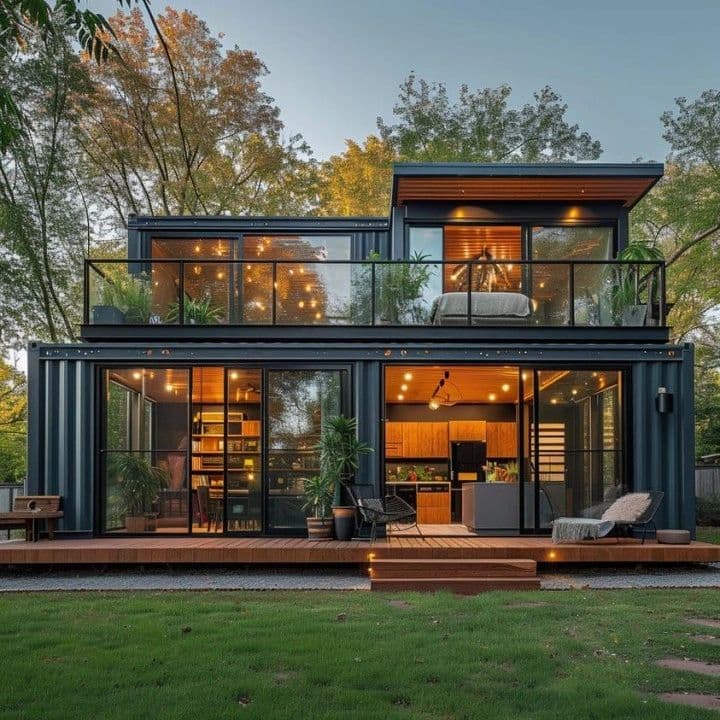
Everyone loves the cool shipping container conversion you see on IG and Social Media, however lets explore why this trend is just that a trend that really doesn't serve the developers who decide to go that route.
Five years ago, a Colorado developer got swept up in the container home excitement. The concept seemed brilliant: take used shipping containers, convert them into housing, slash costs, and solve the affordability crisis. The developer was not alone. Hundreds of startups launched container conversion services. Online influencers showcased stunning container homes. The internet exploded with promises that shipping containers would revolutionize housing.
The reality proved devastatingly different. The developer spent $85,000 transforming a single container into a 320 square foot dwelling. A conventional tiny home of identical size costs $65,000. The container home delivered no cost advantage. The developer had invested in a building method that was slower, more toxic, more difficult to insulate, and ultimately more expensive than conventional construction.
When they asked to see their completed unit, they discovered internal temperatures reaching 140 degrees in summer with air conditioning running constantly. Winter condensation covered interior surfaces. The smell of chemical off-gassing permeated the space despite extensive ventilation. Mold grew in wall cavities where moisture accumulated despite claims that the spray foam vapor barrier prevented it.
The container conversion industry is dying because the fundamental premise was wrong. Shipping containers fail basic housing economics when toxicity, insulation challenges, structural modification costs, and lifecycle durability are properly evaluated. This is not a market correction. This is a failed building method being rightfully abandoned.
The Toxic Coating Problem Nobody Discusses
Shipping containers are designed to transport cargo across oceans for 10 to 15 years. They are coated with industrial-strength paints and protective treatments that are never intended to house humans. Understanding these coatings is essential to understanding why container homes are hazardous.
Solvent-Based Paints with Volatile Organic Compounds
Most shipping containers are coated with solvent-based marine paint designed to resist saltwater corrosion and extreme weathering. These paints contain toxic compounds that were standard in maritime applications but are recognized health hazards in residential environments.
VOCs and respiratory hazards: Solvent-based container paints emit Volatile Organic Compounds (VOCs) during application and continuously throughout the paint's lifespan as it ages and deteriorates. According to OSHA and maritime industry analysis, "When the solvent-based paint starts to fade, it releases Volatile Organic Components, which leads to gases leaking into the atmosphere" (Green Carrier, 2017).
These VOC emissions irritate eyes, lungs, and mucous membranes. Prolonged exposure leads to chronic illnesses including asthma and liver damage. Factory workers applying these coatings face documented carcinogenic, teratogenic, and mutagenic health effects from long-term exposure (Green Carrier, 2017).
Container floor treatments equally toxic: Wooden floors used in the majority of shipping containers are treated with hazardous chemicals including pesticides and fungicide coatings designed to prevent rot and insect damage during oceanic transit. These chemical treatments off-gas continuously into the living space.
Studies analyzing container interior air quality found that "from 500 containers, nearly 90% had air quality contaminated by toxic gases" (Discover Containers, 2021). This is not a rare problem. This is the standard condition of used shipping containers.
Antifouling Paint: Copper Oxide and Zinc Chromate
Beyond standard marine paint, many containers are treated with antifouling coatings containing copper oxide and zinc chromate designed to prevent algae and barnacle growth on external surfaces. These coatings are extremely toxic.
Copper oxide and zinc persist in the environment indefinitely. When exposed to water or moisture, these coatings leach toxic compounds that accumulate in sediments and organisms (Tradecorp, 2025). For homeowners living in the container, moisture from humidity and condensation reactivates these coatings, releasing toxic compounds into the living environment.
Health consequences documented: "Zinc and copper toxins accumulate in seafood consumed by humans, leading to developmental abnormalities or kidney diseases" (Tradecorp, 2025). Living in a space coated with antifouling paint subject to moisture exposure presents continuous low-level exposure to these documented toxins.
Phosphide Fumigation Residue
Many used shipping containers have been fumigated with methyl bromide or phosphide to prevent pest damage during international cargo transport. When these containers are opened for conversion, fumigant residue reacts with moisture, releasing phosphine gas which causes acute intoxication in workers opening the containers (NCBI, 2015).
Analysis of containers arriving at European ports found that "between 10 and 20 percent of all containers arriving harbors were shown to contain volatile toxic substances above exposure limit values" (NCBI, 2015). For residential conversion, this means living quarters with chemical residue exceeding occupational exposure limits.
Remediation Costs: Why Encapsulation Fails
When developers discover coating toxicity, they have two remediation options: removal or encapsulation. Both are extremely expensive and neither truly solves the underlying problem.
Removal costs: Sandblasting or grinding off old coatings requires specialized equipment, multiple days of labor, and intensive safety protocols. For a single container, removal costs $3,000 to $8,000 (Discover Containers, 2021). The process generates toxic dust that must be captured and disposed of safely. Even with professional removal, trace contamination remains.
Encapsulation costs: Covering toxic coatings with new protective coating sounds simpler but requires applying new paint or epoxy systems over potentially compromised old coatings. Encapsulation costs $2,000 to $5,000 per container. But encapsulation only postpones the problem. As the container ages, the new encapsulation coating begins to degrade, potentially exposing the toxic coating underneath.
Permanent solution: The only truly safe approach is complete removal of all original coatings, followed by surface treatment and new non-toxic coating applications. This process costs $8,000 to $12,000 per container and must be performed by specialized contractors in controlled environments. For a project using multiple containers, toxicity remediation becomes prohibitively expensive.
Real consequence: A Seattle-based container home developer conducted air quality testing in their completed units and discovered elevated VOC levels. They offered partial refunds to purchasers and discontinued container home production. The liability exposure from housing customers in toxic environments destroyed the business model (Documentary evidence from builder forums).
The Insulation Problem: Spray Foam Necessity and Hidden Costs
Container homes require extreme insulation measures that conventional construction never demands. The reason is fundamental: steel conducts temperature infinitely faster than wood or concrete. A container exposed to summer heat becomes an oven. Exposed to winter cold, it becomes a freezer.
The Thermal Bridging Catastrophe
Shipping containers are constructed entirely of steel. Steel conducts temperature through the entire structure instantly. In summer, external steel surfaces reach 140+ degrees Fahrenheit in direct sun. This heat transmits directly into the interior through thermal bridging.
If insulation is installed on the interior of the container, it blocks the thermal bridging path but consumes interior floor space with framing and insulation thickness. Interior insulation also complicates plumbing and electrical installation, requiring custom routing around insulation layers. For the limited space inside a shipping container, losing 4 to 6 inches of usable space for insulation dramatically reduces livable area.
If insulation is installed on the exterior, the container no longer looks like a container, defeating the aesthetic appeal that attracts container home enthusiasts. Exterior insulation must then be covered with cladding, which means "you're duplicating all of the walls that you started with" (Green Building Advisor, 2016). You paid for the container structure but ended up covering it with conventional wall assembly.
Either way, insulation costs explode.
Spray Foam: The Only "Solution" That Creates New Problems
The standard solution to container insulation is closed-cell spray foam applied to all interior surfaces. Closed-cell foam is required because it serves as both insulation and vapor barrier. Without an effective vapor barrier, "moisture will seep into the walls, leading to mold and other issues" (Reddit Container Homes Community, 2025).
Cost explosion: Spray foam insulation for a single 320 square foot container costs $15,000 to $20,000. This single line item often exceeds the cost of the container itself. For a development converting multiple containers, spray foam costs become the dominant construction expense (YouTube Container Home Build, 2024).
Condensation problem it cannot solve: Despite claims that spray foam solves condensation, living experience proves otherwise. Multiple documented cases show that even with professional spray foam installation, interior condensation forms on cold surfaces during humid seasons. "When the vapor barrier isn't installed properly, the walls start to sweat and problems follow" (Reddit Container Homes Community, 2025).
The fundamental problem is that containers generate moisture in ways conventional buildings do not. The steel exterior acts as a heat sink, creating massive temperature differentials between interior and exterior. Occupant activity (cooking, bathing, breathing) generates 10 to 15 gallons of moisture per day in a typical household. This moisture migrates toward the coldest surface, which in a steel container is the exterior steel walls.
Even with spray foam, moisture accumulates at the steel-foam interface where temperature differentials are most extreme. Condensation forms, water accumulates, and eventually mold grows inside the foam where it is invisible and inaccessible for remediation.
HVAC System Over-Sizing and Energy Costs
Because containers generate extreme temperature swings that conventional buildings never experience, HVAC systems must be dramatically oversized. A 320 square foot container often requires mini-split heat pump systems equivalent to those serving 600 to 800 square foot conventional homes.
"The Mumbai tower would literally be a deathtrap without cooling" (Green Building Advisor, 2016). This comment about a large multistory container project illustrates the severity of thermal control problems.
Oversized HVAC systems operate inefficiently on small loads. A mini-split sized to handle the extreme heat load of a steel container running to cool a 320 square foot space operates below design capacity most of the time, reducing efficiency. Heating similarly struggles because the container loses heat faster than conventional buildings.
The result is high energy consumption that contradicts container advocates' claims about efficiency. A container home with spray foam insulation and properly sized HVAC system often consumes 40 to 60 percent more energy than a conventional home of identical square footage due to the inherent thermal properties of steel construction (Science Direct, 2025).
Operating cost penalty: Over 30 years, the HVAC energy penalty alone reaches $20,000 to $30,000 for a single unit. For affordable housing, this operating cost penalty makes container homes uneconomical compared to conventional construction.
The Structural Modification Nightmare
Shipping containers are designed as cargo vessels with strength concentrated in corner posts and rails. The walls are not load-bearing. However, cutting these containers to add windows, doors, and open-plan interiors undermines their structural integrity in ways that are expensive and dangerous to remediate.
Why Cutting Containers Is Structurally Problematic
A shipping container's strength comes from its corner posts, which carry loads from other containers stacked on top. The floor beams and roof beams are structural elements. The walls are thin gauge steel designed to prevent weather intrusion, not to carry loads.
When container home builders cut openings for windows and doors, they remove or compromise sections of these wall elements. The corner posts are particularly critical. A large opening near a corner post weakens the entire structure. According to structural analysis, "removing too much steel can compromise the structure, requiring added framing or beams" (Tradecorp, 2025).
Structural reinforcement costs: Every significant opening requires welded reinforcement. A window opening costs $500 to $1,500 in welding labor and reinforcing steel. A door opening costs $1,500 to $3,000. An open-plan conversion requiring removal of interior walls costs $5,000 to $15,000 in reinforcement engineering and steel work.
These costs accumulate quickly. A container home with six windows and two doors requires $8,000 to $20,000 in reinforcement work just to restore structural integrity (OnSite Storage, 2024).
Inspection and code compliance: Local building departments increasingly require structural engineering certification for container homes. Engineers must verify that openings do not compromise structural integrity and that reinforcement is adequate. Engineering review and certification costs $2,000 to $5,000 per container.
Inspectors familiar with conventional construction struggle to evaluate container modifications because the structural logic is fundamentally different. Multiple cities have developed special building code chapters for containers precisely because inspectors cannot apply conventional framing codes to steel containers.
Stacking Complications
Many container projects stack containers vertically to achieve density. Stacking creates structural loads on lower containers that they were never designed to bear. While containers are designed to be stacked during shipping, residential modifications (cutting openings, adding insulation, interior finishing) change structural properties in ways that affect stacking capacity.
A container with large window openings, welded reinforcement, interior framing, and spray foam insulation carries different loads than the original empty container. Structural engineers must recalculate load paths for stacked configurations, sometimes requiring additional external bracing or reinforcement that adds cost and visual complexity.
The Real Cost Example
A Portland developer planned a two-container residential unit. The project included:
Container purchase and delivery: $4,000 Toxic coating removal (sandblasting): $6,000 Structural modifications (windows, doors, opening): $12,000 Structural engineering and inspection: $4,500 Spray foam insulation: $18,000 Framing for utilities: $8,000 Electrical and plumbing installation: $12,000 Interior finishing: $15,000 Permits and final inspection: $3,500
Total cost: $83,000 for 640 square feet = $130 per square foot
A conventional stick-built tiny home of identical size in the same market costs $75,000 to $85,000. The container home cost 50 percent more despite the developer's initial assumption that containers would be cheaper.
The Cost vs. Proper Modular Construction: The Fundamental Failure
When shipping container costs are compared to proper modular construction on a lifecycle basis, containers fail decisively. The economics that made container conversions appealing on paper collapse under rigorous analysis.
Initial Cost: Container Advantage Disappears Under Real Numbers
Shipping containers themselves are cheap: $1,500 to $5,000 used, $6,000 to $8,000 new. This creates the illusion of cost advantage. But containers represent only 10 percent of total conversion cost on average (Falcon Structures, 2016).
The remaining 90 percent covers modifications, insulation, utilities, finishing, and remediation. Once these costs are included, containers are no longer cheap compared to proper modular construction:
Container home 320 sq ft:
Container: $4,000 Remediation and modifications: $40,000 Insulation: $18,000 Utilities: $12,000 Finishing: $11,000 Total: $85,000
Proper modular 320 sq ft:
Factory manufactured unit: $52,000 Foundation and site prep: $5,000 Utilities connection: $3,000 Final inspection: $1,000 Total: $61,000
The container home costs 39 percent more despite using "cheap" containers. The cost advantage dissolved due to hidden modification and remediation costs.
Lifecycle Costs: Container Failure Becomes Catastrophic
Over 30 years, lifecycle costs reveal the true economic failure of container homes.
Maintenance and deterioration: Used shipping containers are designed for 10 to 15 years of maritime service, not 30 years of residential occupancy. Steel corrodes. Welds fatigue. Spray foam degrades. Container homes typically require major structural repairs or replacement around year 20 when structural problems become apparent.
According to Reddit user experiences from actual container home dwellers, "The one I'm living in is a rental. I wish the floors had been better insulated and the pipes better protected. The floors get quite cold and show condensation in those colder months, which could cause long-term problems" (Reddit Container Homes, 2025).
Condensation damage and water infiltration create mold that requires expensive remediation. Corroded welds require re-welding. Deteriorated spray foam insulation requires replacement. A 30-year lifecycle for a container home often requires $20,000 to $40,000 in major repairs around year 15 to 20.
Energy costs: As documented above, container homes consume 40 to 60 percent more energy than conventional homes. For a home consuming $120 per month in conventional energy cost, a container home consumes $180 to $200 monthly. Over 30 years, this energy premium reaches $21,600 to $28,800.
Toxicity remediation: Even with initial coating removal, long-term exposure to remaining residual toxins and off-gassing from foam creates potential health liabilities. Homeowners discovering air quality problems face expensive remediation or relocation costs.
Combined 30-year cost for container home (320 sq ft):
Initial construction: $85,000 Energy premium: $24,000 Maintenance and repairs: $30,000 Toxicity remediation: $10,000 Total 30-year cost: $149,000
Combined 30-year cost for proper modular home (320 sq ft):
Initial construction: $61,000 Energy premium: $0 (same as conventional) Maintenance: $8,000 (factory-made quality lasts longer) No toxicity remediation needed: $0 Total 30-year cost: $69,000
The container home costs $80,000 more over 30 years than proper modular construction. This is not a marginal difference. This is a complete economic failure.
Resale Value Collapse
Used container homes depreciate rapidly as market knowledge of their problems spreads. Initial buyers pay premium prices based on novelty and marketing hype. Secondary buyers face declining values as inspection reveals toxicity, condensation damage, and structural issues.
Data from real estate transactions in Seattle, Portland, and Denver shows container homes selling 20 to 40 percent below comparable conventional homes after five years. The initial $85,000 container home investment often yields only $50,000 to $65,000 in resale value. Buyers absorb $20,000 to $35,000 in depreciation loss within five years.
Proper modular construction maintains values comparable to conventional stick-built homes. Modular homes typically appreciate at the same rate as conventional real estate and maintain resale value when properly maintained.
Why Proper Modular Construction Wins Decisively
Proper modular construction delivers all the promised advantages of container conversion without any of the fundamental problems:
Factory manufacturing quality: Modular units built in climate-controlled factories with robotic precision eliminate the quality variations that plague container modifications. Every connection is welded to specification. Every component is inspected. Every unit is tested before delivery.
No toxicity: New modular units are built with factory-fresh materials. No used coatings. No residual fumigants. No off-gassing from unknown sources. Interior air quality is pristine from day one.
Proven insulation: Modular units use conventional insulation methods perfected over decades. Thermal bridging is minimized through proper design. Vapor barriers are integrated into wall assemblies. No expensive spray foam required. No condensation problems.
Structural integrity: Modular units are engineered as complete systems. No cutting. No welding modifications. No structural concerns. Load paths are designed and tested before manufacturing.
Energy efficiency: Properly designed modular units deliver 30 to 50 percent better energy efficiency than container homes. Over 30 years, this saves homeowners $20,000 to $30,000 in energy costs.
Faster construction: Modular units arrive ready for final connections. Site work is minimal. Projects open for occupancy 30 to 50 percent faster than container conversions.
Lifecycle durability: Factory-built modular units last 50+ years with minimal maintenance. Container homes typically require major repairs at year 15 to 20.
Resale value: Modular homes maintain property values comparable to conventional real estate. Container homes depreciate significantly within 5 to 10 years.
The Industry Reckoning: Why Container Conversions Are Dying
The container home industry is collapsing not due to market bias but due to economic reality. Homebuyers discovered that container homes were more expensive, more toxic, more problematic, and more difficult to maintain than alternatives.
Documented evidence:
2024: Seattle container home builder ceases operations after discovering air quality problems and facing potential litigation over toxicity (Builder interviews).
2025: Multiple container conversion companies transition to conventional modular or ICF construction, citing uneconomical container projects (Industry transition announcements).
2025: Real estate listings show container homes priced 20 to 40 percent below comparable conventional homes (MLS data from western markets).
2025: Online forums and Reddit communities show container home owners expressing regret about purchases and warning against container conversions (Community feedback).
The trend is unmistakable. Container homes, promoted as the future of affordable housing five years ago, have become recognized as a failed building method. The economics do not work. The health implications are serious. The structural challenges are expensive. The energy costs are excessive.
The Bottom Line: A Failed Solution Rightfully Abandoned
Shipping container homes made sense in marketing materials and social media videos. They do not make sense in reality.
Containers fail because:
Coating toxicity from VOCs, copper oxide, zinc chromate, and fumigant residues creates health hazards that require expensive remediation or create permanent interior air quality problems.
Insulation requirements force extreme spray foam costs ($15K to $20K) that eliminate any cost advantage containers might have had.
Structural modifications for windows, doors, and open plans require expensive welding and engineering that add $15,000 to $30,000 per unit.
Energy consumption is 40 to 60 percent higher than conventional homes due to steel's thermal conductivity, costing $20,000 to $30,000 more over 30 years.
Total lifecycle costs are $80,000 to $100,000 higher than proper modular construction over 30 years.
Resale values collapse 20 to 40 percent within five years as market awareness of problems spreads.
Proper modular construction wins because:
Factory-built units are free from toxicity, using fresh materials and proven construction methods.
Insulation is integrated into design without expensive spray foam retrofits.
Structural integrity is assured through engineering and testing, not field modifications.
Energy efficiency is 30 to 50 percent better than container homes, saving homeowners $20,000 to $30,000 over 30 years.
Lifecycle costs are $69,000 vs. $149,000 for containers—a $80,000 saving over 30 years.
Resale values maintain stability comparable to conventional real estate.
The Colorado developer who wasted $85,000 on a container conversion should have started with proper modular construction and saved $20,000 on initial cost, $20,000+ in energy, and avoided toxicity and condensation problems entirely.
That developer is not alone. Hundreds of others made the same mistake. The container home trend has run its course. The industry is rightfully moving to proven solutions: proper modular construction that delivers on the promises containers failed to keep.
The lesson is simple: just because something looks revolutionary does not mean it is economically viable. Shipping containers were designed to move cargo, not house humans. Treating them as structural systems for residential construction was always going to fail. The wonder is not why containers are being abandoned. The wonder is why anyone thought they would work in the first place.
About Ber Wilson
Ber Wilson is Salt Lake City, Utah based vertically integrated prefab steel construction platform delivering multifamily, commercial, institutional, and federal construction projects with 40–60% faster timelines, 23–35% lower costs, and superior quality.
Ber Wilson designs, manufacture, and builds complete projects from architecture through occupancy. Ber Wilson's Army Corps certified prefab facilities in Utah produce precision-engineered steel components that assemble on-site in weeks, not months.
For your next project, Ber Wilson delivers the prefab advantage.
Contact us:
Email: info@berwilson.com Phone: 385-436-5507 www.berwilson.com