Why Spray Foam is the wrong Insulation Choice for Buildings.
| By Ericson Tua'one
- Commercial
- Construction
- Federal
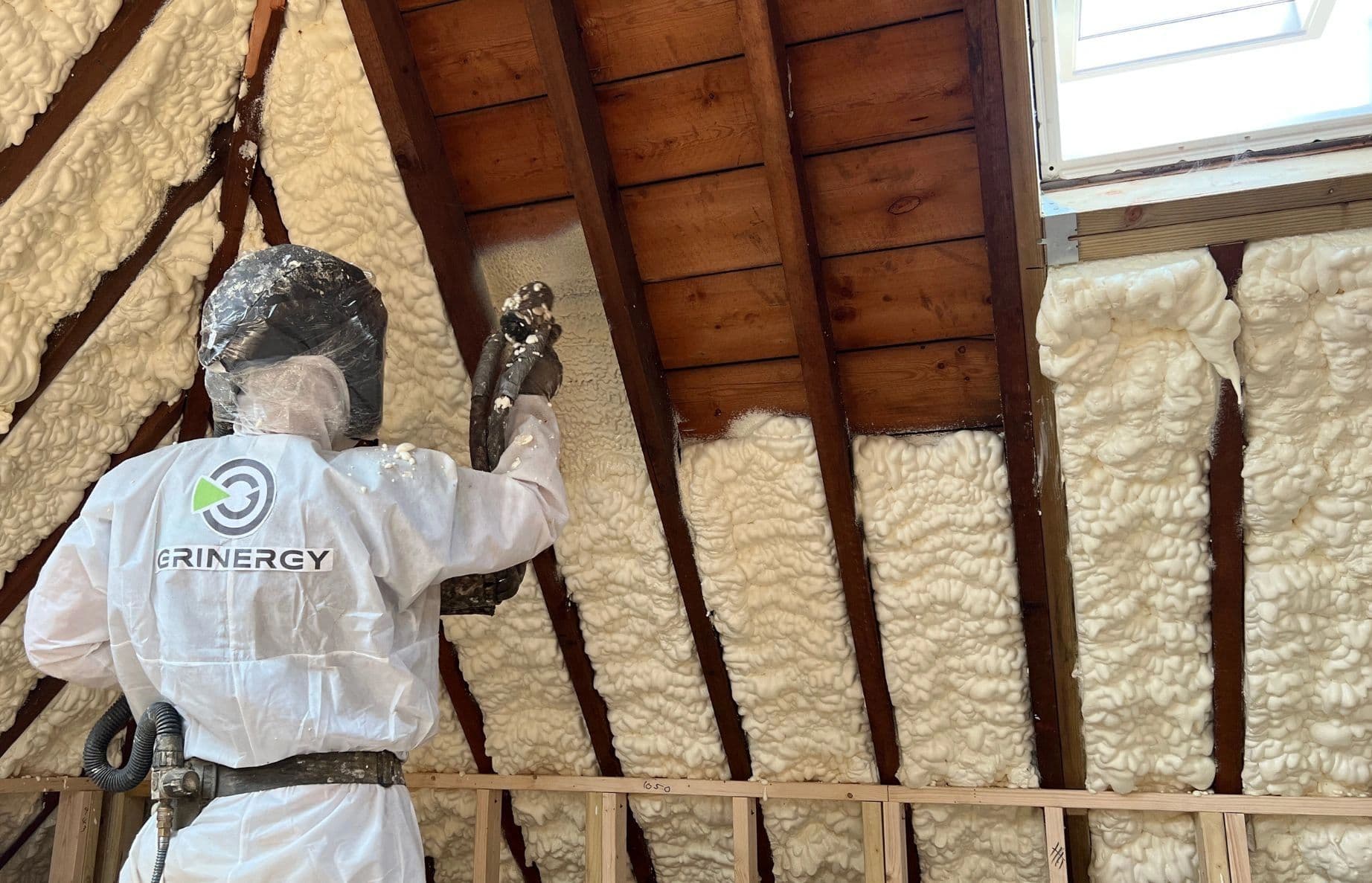
In 2012, a Vermont contractor named Peter Crossman thought he was doing the right thing. His 1840s farmhouse needed better insulation. An energy auditor recommended spray foam. Vermont Foam Insulation came out and applied closed-cell foam to his attic. The company collected payment and left.
Eight years later, Crossman discovered his entire roof had dry-rotted. The spray foam had trapped moisture against wooden beams and roof decking. What started as a $12,000 insulation project became a $300,000 disaster requiring roof replacement, second-floor wall reconstruction, new windows, and renting another home during repairs (VTDigger, 2023).
Crossman sued the insulation company. The case dragged through mediation for a year and a half. He eventually settled for less than half his documented damages. The insulation company refused to accept liability. Vermont Foam Insulation continues operating today, still installing the same product that destroyed Crossman's home.
This is not an isolated case. This is the predictable result when homeowners are sold a toxic, structurally destructive product marketed as an energy-efficient miracle solution. The spray foam industry has spent two decades building a mythology that this material is safe, effective, and superior to conventional insulation. The reality documented by health departments, building scientists, mortgage lenders, and thousands of victimized homeowners tells a dramatically different story.
Spray foam is not innovative. It is dangerous. It causes respiratory illness, destroys building structures, costs tens of thousands to remove, and has become so problematic that major mortgage lenders now refuse to finance homes containing it. This is not industry bias. This is evidence-based risk assessment by institutions that understand what homeowners do not: spray foam is a financial and health catastrophe waiting to happen.
The Toxicity Problem: Isocyanates and Chronic Health Damage
Spray polyurethane foam (SPF) is created by mixing two highly reactive chemical components: isocyanates and polyols. When combined, they expand and harden into foam. The industry claims that once cured, spray foam becomes inert and nontoxic. This claim is false, and the evidence proving it false is overwhelming.
Isocyanates: Respiratory Sensitizers Causing Permanent Damage
Isocyanates are classified as hazardous by the Occupational Safety and Health Administration (OSHA). According to the EPA and health agencies worldwide, exposure to isocyanates causes skin irritation, eye irritation, lung irritation, asthma, and chronic respiratory disorders. The most alarming effect is called sensitization.
Sensitization means that after enough exposure, individuals become permanently hypersensitive to airborne contaminants. Once sensitized, affected people experience respiratory distress from exposure to dust, pollen, and other common allergens that never bothered them before. There is no cure. Sensitization is permanent (Indoor Doctor, 2024).
The risks extend far beyond professional installers. Homeowners and occupants face exposure during installation and continuously afterward through off-gassing. According to documented medical research, "exposure to isocyanates can cause skin, eye and lung irritation, asthma, and sensitization. Isocyanates are irritants to the mucous membranes of the eyes and gastrointestinal and respiratory tracts. The inhalation of isocyanates is associated with severely adverse health effects such as asthma, inflammation in the respiratory tract and cancer" (Summit Environmental, 2025).
Cancer. The chemicals in spray foam insulation are linked to cancer risk. This is not speculation. This is documented medical evidence from occupational health research.
Off-Gassing: The 24-Hour Myth vs. Reality
The spray foam industry claims that off-gassing completes within 24 to 48 hours after installation and that homeowners can safely return after this curing period. Real-world evidence proves this claim is dangerously false.
According to air quality research, "off-gassing from spray foam can last differently for everyone. It's highest right after installation and can take several days to weeks to lessen. Some studies suggest it can keep releasing gases for months" (VB Insulation, 2024). Other studies documented that VOC emissions can continue indefinitely if foam is improperly installed, which occurs in the majority of installations.
A 2013 Connecticut General Law Committee testimony documented a homeowner whose spray foam "shrunk, cracked, gave off a strong noxious odor and even exploded in the middle of the night" (VTDigger, 2023). The family lived in the house during remediation when spray foam dust filled their home. They were never warned about health effects. Years later, the homeowner faced chronic respiratory illness attributed to prolonged chemical exposure.
The "Proper Installation" Fallacy
Spray foam industry defenders claim that health problems only occur when foam is improperly installed. This defense collapses under examination. Proper installation requires perfect temperature, perfect humidity, perfect mixing ratios, perfect thickness application, and perfect ventilation. According to documented analysis:
"Spray foam installation involves mixing two chemical compounds that expand and seal gaps when combined. During this process, off-gassing occurs, releasing volatile organic compounds (VOCs) and other chemicals into the air. The duration and intensity of off-gassing vary by several factors including the type of foam used, application thickness, indoor temperature and humidity, and ventilation" (MAG Insulation, 2024).
Any deviation from perfect conditions results in improper curing and prolonged off-gassing. In cold environments, foam takes longer to cure. In humid environments, moisture interferes with chemical reactions. If installers mix ratios incorrectly even slightly, curing fails. If application thickness exceeds specifications, interior foam sections never fully cure.
The critical problem is that perfect installation is nearly impossible in real-world conditions. Installers work in attics where temperature and humidity fluctuate throughout the day. They apply foam to irregular surfaces where achieving uniform thickness is impossible. They rush jobs to complete them within scheduled timeframes. According to national class action litigation, "proper installation (and thus nontoxicity) is nearly impossible given the exacting set of installation requirements and inadequate training and installer certification methods" (Top Class Actions, 2021).
Formaldehyde and Flame Retardants: Additional Toxic Compounds
Beyond isocyanates, spray foam contains other documented toxins. Many formulations include formaldehyde, a known human carcinogen that irritates eyes, nose, and throat. According to EPA research, "even when properly installed, foam insulation can emit volatile organic compounds (VOCs), including formaldehyde, a probable human carcinogen" (Rare Forms, 2025).
Some manufacturers add flame retardants to provide fire resistance. These compounds include chlorinated tris, which is banned in children's products due to documented health hazards. Flame retardants bioaccumulate in human tissue over time, causing endocrine disruption, reproductive harm, and developmental abnormalities (Top Class Actions, 2021).
Air Quality Studies: 90 Percent Contamination Rate
Studies analyzing container interior air quality provide alarming evidence about spray foam toxicity. Research found that "from 500 containers, nearly 90% had air quality contaminated by toxic gases" when spray foam insulation was present (Discover Containers, 2021). This contamination rate is not occasional. It is systematic.
Indoor air quality in homes insulated with spray foam consistently shows VOC concentrations two to five times higher than outdoor air, with some instances exceeding outdoor levels by over 100-fold (Rare Forms, 2025). For vulnerable populations including children, elderly, and those with respiratory conditions, these VOC concentrations cause severe health consequences.
The Airtight Trap: Ventilation Failure and Indoor Pollution
Spray foam creates such an effective air seal that it eliminates natural ventilation entirely. The industry markets this as an advantage for energy efficiency. Building science recognizes it as a catastrophic design flaw that traps pollutants, moisture, and carbon dioxide inside homes at dangerous concentrations.
Carbon Dioxide and Carbon Monoxide Buildup
According to building science analysis, "an airtight home can cause a build-up of carbon dioxide gas and trap volatile organic compounds (VOCs) or other pollutants" (Indoor Doctor, 2024). Homes without adequate mechanical ventilation experience dangerous CO2 accumulation that causes headaches, fatigue, cognitive impairment, and in extreme cases, unconsciousness.
Carbon monoxide from combustion appliances presents even greater danger. In conventionally insulated homes, minor amounts of CO escape through natural air leakage. In spray foam homes, CO accumulates to lethal concentrations unless mechanical ventilation operates continuously. Families have experienced CO poisoning in spray foam homes when ventilation systems failed or were turned off to save energy.
Trapped Moisture and Mold Proliferation
The airtight seal that prevents air exchange also prevents moisture from escaping. Occupant activities generate 10 to 15 gallons of water vapor daily through cooking, bathing, breathing, and laundry. In conventional homes, this moisture escapes through air leakage and diffusion. In spray foam homes, moisture becomes trapped.
"The airtight environment also increases humidity levels, which, unchecked, can lead to mold problems within the home" (Indoor Doctor, 2024). Mold grows in wall cavities, attic spaces, and basements where humidity accumulates behind the vapor-impermeable foam barrier. Occupants do not discover mold until health problems emerge or visible growth appears.
The Expensive Ventilation Solution Nobody Budgets For
To prevent indoor air quality disasters in spray foam homes, sophisticated mechanical ventilation systems are essential. Energy Recovery Ventilation (ERV) or Heat Recovery Ventilation (HRV) systems exchange stale indoor air with fresh outdoor air while recovering heating or cooling energy.
These systems cost $5,000 to $12,000 installed. Most homeowners who install spray foam never budget for this necessary equipment. They discover the need only after experiencing indoor air quality problems. By that point, they have already invested $15,000 to $30,000 in spray foam insulation and cannot afford the additional ventilation expense.
The result is families living in toxic environments with elevated CO2, trapped VOCs, excessive humidity, and mold growth. Children develop asthma. Adults experience chronic respiratory illness. The "energy-efficient" home becomes an uninhabitable health hazard.
The Structural Destruction: Roof Timber Rot and Building Failure
The spray foam industry's greatest lie is that closed-cell foam protects building structures. The opposite is true. Spray foam accelerates structural deterioration by trapping moisture against wood, preventing drying, and concealing damage until catastrophic failure occurs.
The UK Crisis: 250,000 Homes Facing Roof Collapse
The United Kingdom is experiencing a spray foam catastrophe of such magnitude that major mortgage lenders have stopped financing homes containing it. According to BBC investigation, a quarter of the UK's largest mortgage lenders will not lend against properties where spray foam is found in the roof space. TSB Bank, Skipton Building Society, Co-operative Bank, Principality, and equity release lender Aviva explicitly refuse spray foam properties. Yorkshire Building Society and Metro Bank "would not usually lend where there is a significant amount of spray foam" (BBC, 2024).
An estimated 250,000 UK homes contain spray foam insulation, much of it installed under the previous government's Green Homes Grant scheme. Homeowners who accepted government subsidies to install "energy-efficient" spray foam now cannot sell their homes. When they attempt to refinance mortgages, lenders refuse. Property values have collapsed by £20,000 to £50,000 instantly when spray foam is discovered (National Spray Foam Advice, 2025).
The reason lenders refuse spray foam homes is documented structural failure. When spray foam is applied to roof spaces, it creates a vapor-impermeable barrier that prevents moisture from escaping. Roof timbers exposed to any moisture source (leaks, condensation, construction moisture) cannot dry. Trapped moisture causes rot. According to analysis from Alpine Surveys, spray foam causes:
Timber damage: Trapped moisture cannot evaporate, leading to rot, decay, and weakened roof timbers. Structural damage: As timber degrades, it compromises the integrity of the entire roof structure. Trapped moisture: Closed-cell foam creates an airtight barrier, preventing the roof from breathing and increasing condensation risk. Inspection problems: Foam conceals leaks, damp, and timber decay, making it hard for surveyors to assess roof condition. Reduced roof ventilation: Proper airflow is essential in loft spaces. Spray foam blocks ventilation, causing condensation buildup (Alpine Surveys, 2025).
Vermont Case Study: $300,000 Remediation After Eight Years
Return to Peter Crossman's Vermont farmhouse disaster. When Vermont Foam Insulation applied spray foam in 2012, the company claimed it would improve energy efficiency and protect the structure. Eight years later, Crossman discovered catastrophic dry rot throughout his roof structure.
He hired a building science expert who concluded that separating installation defects from preexisting moisture conditions was impossible after eight years. The spray foam company blamed preexisting moisture. Crossman blamed improper installation. The expert could not definitively assign fault.
This ambiguity is typical and demonstrates the insidious nature of spray foam damage. By the time structural failure becomes apparent, it is too late to determine causation. The foam conceals gradual deterioration for years. When damage emerges, installers claim preexisting conditions. Homeowners have no recourse.
Crossman's lawsuit demanded $300,000 for materials, labor, temporary housing, and related costs. After a year and a half of mediation, his attorney advised settling for less than $150,000. The insurance company and Vermont Foam Insulation refused to accept liability. Crossman absorbed catastrophic losses despite overwhelming evidence that spray foam destroyed his home (VTDigger, 2023).
The 1850s Timber Frame Reddit Discussion: Expert Consensus Against Spray Foam
A 2025 Reddit discussion about spray foam in an 1850s timber frame house produced unanimous expert consensus: do not use spray foam on historic timber structures.
Comments from experienced timber framers and building professionals included:
"It's not a matter of if the foam will fail, it's when. I'd certainly not use spray foam—it's asking for timber rot down the line." (43 upvotes)
"Spray foam is going to hold water against that material speed running the rot death. The principal rafters and purlin stock is in really good shape considering its age. It's bad for the frame to hold water against it the way foam will." (19 upvotes)
"In the UK they're close to banning spray foam as folks use it in this context and then their roof collapses due to water damage." (11 upvotes)
"Using spray foam insulation is not suitable for this type of structure. If applied, it could lead to rotting within a few years." (3 upvotes)
"Spray foam insulation is a permanent solution that cannot be undone. It is notorious for fostering mold growth. The question isn't if the foam will fail, but rather when it will happen." (1 upvote)
The consensus is clear: experienced building professionals recognize spray foam as a structural threat, particularly in older timber buildings. Yet the spray foam industry continues marketing to homeowners who trust manufacturer claims over professional expertise (Reddit Timber Frame, 2025).
Moisture Entrapment in All Climates
Spray foam defenders claim that moisture problems only occur in specific climates or with poor installation. Building science research proves otherwise. According to documented analysis:
"Closed-cell spray foam acts as a vapor retarder, inhibiting the diffusion of water vapor through wall assemblies. While this can be beneficial in specific assemblies, it becomes problematic in climates or applications where moisture entry—via bulk water intrusion, capillary action, or vapor drive—is inevitable. Building Science Corporation and other research institutions have documented how vapor-impermeable insulation can exacerbate moisture entrapment, leading to hidden decay, mold proliferation, and eventual structural degradation" (Rare Forms, 2025).
Every building experiences moisture events. Roofs develop minor leaks. Flashing fails. Condensation forms. In conventional assemblies, these moisture events dry harmlessly through ventilation and vapor diffusion. With spray foam, moisture becomes permanently trapped against structural elements. Wood rots. Metal corrodes. Structural failure follows.
The Removal Catastrophe: $15,000 to $50,000 to Undo the Damage
When homeowners discover spray foam problems—whether health issues, structural damage, or mortgage/resale difficulties—removal becomes necessary. Spray foam removal is among the most expensive, labor-intensive, and hazardous construction operations homeowners can face.
Why Removal Is Extraordinarily Expensive
Spray foam adheres tenaciously to every surface it touches. According to documented analysis, "one of the most significant challenges with spray foam insulation—both closed-cell and open-cell varieties—is its tenacious adherence to building materials. Differences between open cell and closed cell spray foam insulation can influence how difficult removal will be, with closed-cell foam being particularly rigid and dense, making extraction even more labor-intensive" (Ecohome, 2024).
Removal requires painstaking manual labor. Workers use specialized scrapers, grinders, and cutting tools to chip away foam millimeter by millimeter. The process damages underlying materials frequently. Wooden beams, roof decks, and structural components are "severely compromised during removal, sometimes to the point where they must be replaced entirely" (Ecohome, 2024).
Health and Safety Hazards During Removal
The removal process releases toxic chemicals and hazardous dust. Workers require full personal protective equipment including respirators, eye protection, and protective clothing. Homeowners must vacate during removal operations because airborne contamination reaches dangerous levels.
"Spray foam can release harmful chemicals and hazardous dust when disturbed, necessitating the use of protective gear and specialized equipment. Moreover, the foam's disposal requires careful handling to comply with environmental regulations, further increasing the cost and complexity of the project" (Ecohome, 2024).
Documented Removal Costs
Real-world removal costs are staggering:
United States:
Small attic (up to 500 sq ft): $750 to $1,500 Medium attic (500-1,000 sq ft): $1,500 to $3,000 Large attic (1,000+ sq ft): $3,000 to $15,000+ Average cost per square foot: $1.50 to $3.00 (SPF Solutions, 2025)
United Kingdom:
Average removal cost: £40 per square metre Typical 3-bedroom detached home (80 square metre loft): £3,200 Range for most homes: £2,000 to £5,000 Complex cases: £10,000 to £20,000+ (East End Taste Magazine, 2025)
Reddit user experience: "I've received three quotes for the removal of open cell spray foam in my attic, which is approximately 1,300 square feet. The estimates came in at $4,000, $15,000, and $16,000. The first contractor indicated that the job would take about two days, while the other two suggested it would require between three to five days" (Reddit Home Improvement, 2023).
The Disposal Problem
Removed spray foam cannot be recycled. It is classified as chemical waste requiring specialized disposal. "The inability to recycle building materials that have been contaminated with spray foam, combined with the challenges of safely disposing of the foam itself, suggests that spray foam insulation may not be as eco-friendly as it is often portrayed" (Ecohome, 2024).
Disposal fees add significant cost to removal projects. Contractors must transport contaminated foam to approved hazardous waste facilities, paying disposal fees per ton. For large removal projects, disposal fees alone can reach $2,000 to $5,000.
The Mortgage and Insurance Industry Response: De Facto Ban
When industries that assess financial risk—mortgage lenders and property insurers—systematically refuse to deal with spray foam homes, homeowners should recognize this as definitive evidence of systemic problems.
UK Mortgage Lenders: Widespread Refusal
As documented above, major UK lenders now refuse spray foam properties. According to comprehensive analysis:
"While no law prohibits spray foam, the mortgage and insurance industries have created what amounts to a de facto ban. Major UK lenders (Nationwide, Halifax, HSBC, Santander, etc.) refuse mortgages on foam-insulated properties. This eliminates 70-80% of potential buyers" (National Spray Foam Advice, 2025).
Lenders that do consider spray foam homes impose severe requirements:
Structural engineering reports confirming no timber damage Documentation proving proper installation by certified installers Warranties covering structural integrity for specified periods Independent inspections by approved surveyors
Most homeowners cannot provide this documentation because installers did not maintain proper records. Without documentation, lenders decline applications outright.
Property Value Destruction: £20,000 to £50,000 Instant Loss
When spray foam is discovered in UK homes, property values collapse instantly. "You'll immediately lose £20,000-£50,000 in property value. Your property becomes difficult/impossible to mortgage. Insurance will be expensive or unavailable. You'll likely need to remove it (£3,000-£20,000) to sell" (National Spray Foam Advice, 2025).
This value destruction is not gradual market adjustment. It is immediate and catastrophic. A home worth £300,000 becomes worth £250,000 to £280,000 the moment spray foam is disclosed. Cash buyers demand deep discounts because they know future resale will be equally problematic.
US Lender Concerns Emerging
While US mortgage lenders have not yet implemented widespread spray foam restrictions comparable to the UK, concerning trends are emerging. According to insurance and construction defect analysis, spray foam homes face higher insurance premiums and increased scrutiny during underwriting.
Class action litigation alleging toxic spray foam has put US lenders on notice that these properties present liability exposure. As cases progress and settlements mount, US lenders will likely adopt policies similar to UK counterparts, refusing or restricting loans on spray foam properties.
The Vermont Case: "I Wanted to Cry"
VTDigger's 2023 investigative report titled "'I Wanted to Cry': Devastating Risks of Spray Foam Insulation Hidden From Vermont Homeowners" documented multiple families facing financial ruin from spray foam disasters.
One couple had spray foam installed under Vermont's energy efficiency incentive programs. Within two years, they experienced severe indoor air quality problems. Chemical odors permeated their home. Family members developed respiratory illness. Air quality testing revealed elevated VOC levels.
Remediation companies quoted $50,000 to $75,000 to remove the foam and repair damage. The couple's home value plummeted when they attempted to sell. Inspectors flagged spray foam as a material concern. Potential buyers walked away. The family faced the choice of spending $50,000+ on removal or accepting a catastrophic loss on sale price.
"I wanted to cry when I realized what we had done to our home," the homeowner said. "We thought we were doing something good for the environment and our energy bills. Instead we poisoned our own home and destroyed its value" (VTDigger, 2023).
The Industry Response: Denial and Continued Marketing
Faced with overwhelming evidence of health hazards, structural destruction, and financial catastrophe, the spray foam industry responds with denial, deflection, and continued aggressive marketing to uninformed homeowners.
The "Proper Installation" Defense
Industry trade associations claim problems only occur with improper installation. This defense is intellectually dishonest. As documented above, proper installation requires perfect conditions that are nearly impossible to achieve in real-world residential applications. When the standard for "proper installation" is unattainable, the product is fundamentally defective.
Blaming Homeowners and Preexisting Conditions
When structural damage emerges, spray foam companies blame preexisting moisture conditions, inadequate ventilation, homeowner negligence, or any factor except the foam itself. The Vermont Foam Insulation response to Peter Crossman's $300,000 lawsuit typifies this approach: "We did not accept liability."
By denying liability systematically, spray foam companies force homeowners into expensive litigation with uncertain outcomes. Most homeowners cannot afford prolonged legal battles and accept inadequate settlements or absorb losses entirely.
Targeting Vulnerable Populations
According to UK consumer protection advocates, spray foam companies engage in predatory marketing targeting elderly homeowners. "Unregulated companies targeting older, potentially vulnerable homeowners, pressuring them to pay for overpriced removal services during unsolicited calls" has become common (BBC, 2024).
Government energy efficiency programs subsidized spray foam installation, lending legitimacy to a fundamentally flawed product. Now that problems have emerged, governments refuse responsibility. One UK homeowner said: "We feel abandoned. It was a government initiative, and you wouldn't expect them to turn their back" (BBC, 2024).
What Homeowners Should Use Instead
If spray foam is categorically rejected, what insulation alternatives deliver energy efficiency without toxicity and structural destruction?
Fiberglass and Mineral Wool: Proven, Safe, Removable
Fiberglass batt insulation has 70+ years of documented safe use. It contains no toxic chemicals. It does not off-gas. It allows vapor diffusion and moisture drying. It can be removed and replaced easily if problems occur.
Mineral wool (rock wool) insulation provides superior fire resistance, acoustic performance, and moisture resistance compared to fiberglass while maintaining the same safety profile. Neither material adheres to building surfaces, preserving structural inspection access.
Cellulose: Environmentally Responsible, Vapor Permeable
Dense-pack cellulose insulation provides excellent thermal performance using recycled newspaper treated with non-toxic borates for fire and pest resistance. Cellulose allows vapor diffusion, preventing moisture entrapment. Installation is fast, cost-effective, and does not require occupant evacuation.
Rigid Foam Boards (Exterior Application Only)
When foam insulation is necessary, rigid foam boards applied to building exteriors avoid the moisture trapping and structural concealment problems of spray foam. Exterior insulation maintains continuous thermal barriers without creating vapor-impermeable assemblies inside building cavities.
The Bottom Line on Alternatives
Conventional insulation materials work. They have proven track records spanning decades. They cost less than spray foam when removal and remediation risks are accounted for. They do not poison occupants, destroy structures, or eliminate property resale capability.
The Verdict: Spray Foam Is Categorically Unacceptable
The evidence is overwhelming and irrefutable:
Health hazards: Isocyanates cause permanent respiratory sensitization, asthma, and cancer risk. Formaldehyde is a known carcinogen. Off-gassing continues for months or years. Ninety percent of spray foam installations produce toxic indoor air quality.
Structural destruction: Spray foam traps moisture against building materials, causing rot, decay, and structural failure. UK mortgage lenders refuse 250,000 homes because structural risk is unacceptable. Vermont homeowners face $300,000 remediation costs.
Removal catastrophe: Removal costs $3,000 to $50,000+, requires hazardous material handling, damages underlying structures, and produces non-recyclable toxic waste.
Financial devastation: Property values collapse £20,000 to £50,000 instantly when spray foam is discovered. Homes become unmarketable. Refinancing becomes impossible. Insurance premiums spike or coverage is denied.
Industry malfeasance: Manufacturers and installers systematically deny liability, blame homeowners, target vulnerable populations, and continue marketing despite documented evidence of catastrophic failures.
The spray foam industry built its business on false claims of safety and performance. Real-world evidence proves those claims were lies. Thousands of families now live in toxic, structurally compromised homes worth tens of thousands less than they paid. Governments that subsidized spray foam installation refuse to help with removal and remediation.
For homeowners considering spray foam: do not install it. No amount of claimed energy savings justifies the health risks, structural damage, and financial catastrophe spray foam creates.
For homeowners with existing spray foam: remove it before attempting to sell or refinance. The cost of removal, while painful, is less than the property value loss and mortgage complications spray foam creates.
For policymakers: ban spray foam in residential applications immediately. The evidence justifying this action is as strong as evidence that banned asbestos, lead paint, and formaldehyde foam insulation. Spray foam belongs in the same category of building materials that seemed beneficial until their catastrophic consequences became undeniable.
Peter Crossman's Vermont farmhouse should be a cautionary tale, not an anomaly. His $300,000 loss should prevent thousands of other families from making the same mistake. Instead, the spray foam industry continues operations, and governments continue subsidizing a product that poisons homes and destroys property values.
The only rational response is complete rejection. Spray foam is not an insulation option. It is a toxic, structurally destructive product that should never be installed in residential buildings. Period.
About Ber Wilson
Ber Wilson is Salt Lake City, Utah based vertically integrated prefab steel construction platform delivering multifamily, commercial, institutional, and federal construction projects with 40–60% faster timelines, 23–35% lower costs, and superior quality.
Ber Wilson designs, manufacture, and builds complete projects from architecture through occupancy. Ber Wilson's Army Corps certified prefab facilities in Utah produce precision-engineered steel components that assemble on-site in weeks, not months.
For your next project, Ber Wilson delivers the prefab advantage.
Contact us:
Email: info@berwilson.com Phone: 385-436-5507 www.berwilson.com